Gaining inspiration from Tudor Royal Portraits: The Welbeck Portrait
The Welbeck Portrait of Elizabeth I (1585) inspired me to write the scene of Queen Elizabeth commissioning a new royal dress from her dressmaker in “The Tudor Maid.”
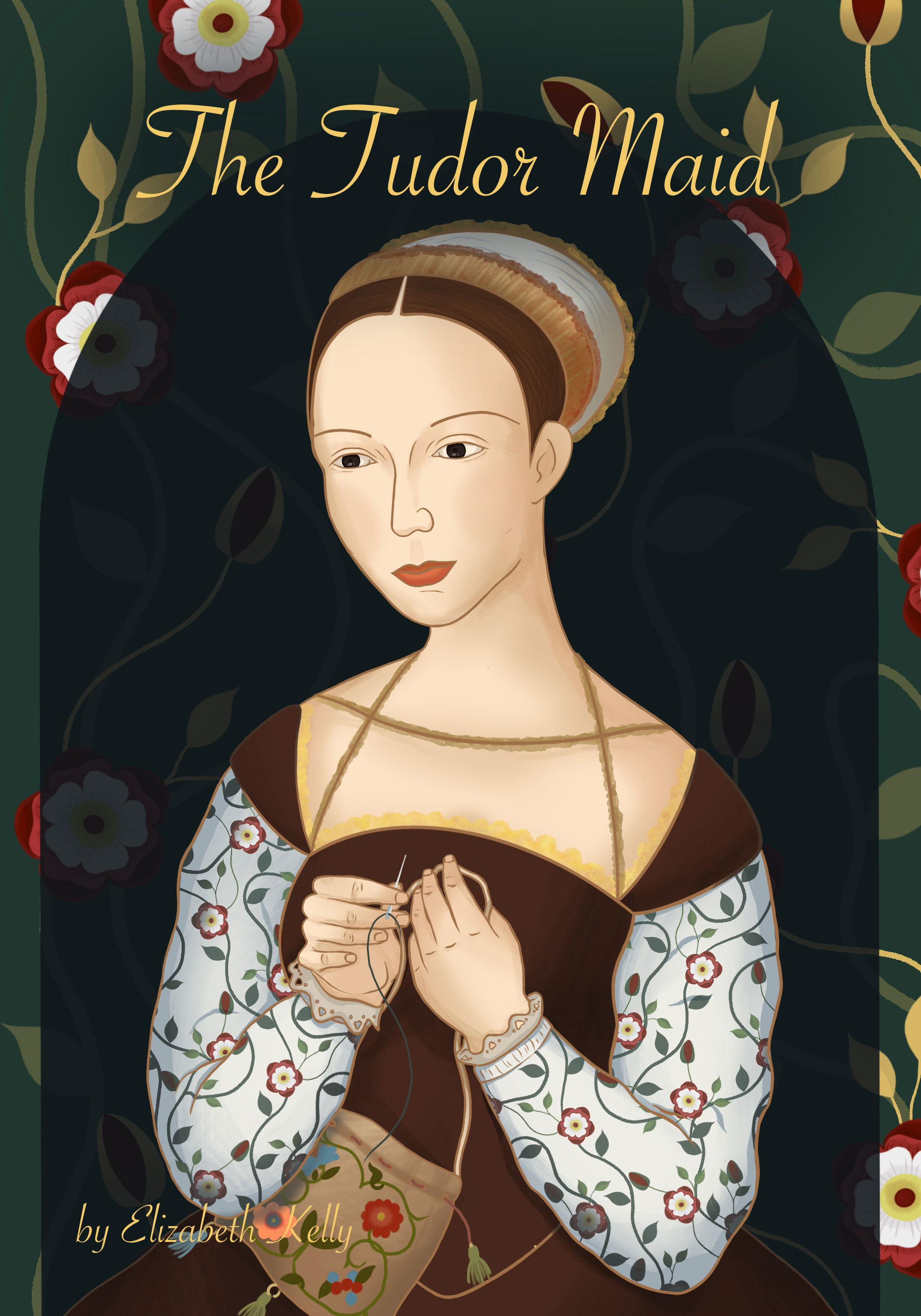
In 2021 I wrote my first historical novel “The Tudor Maid.” Everyone is familiar with the famous story of Henry VIII and Anne Boleyn. But I wanted to tell it from a different perspective. My choice of narrator was Margery Hallows, the seamstress of Anne Boleyn. As a royal servant she experienced a “behind the scenes” view of the Tudor court and its personalities. Her talent as a dressmaker made her essential to the key public occasions of Anne’s life. Anne was renowned for her dress sense and was known as the mirror of fashion. In the course of my research, I discovered that Anne Boleyn actually had a maid named Margery Horsman who worked in the Queen’s Wardrobe. She visited Queen Anne in the Tower of London and brought her some clothes in May 1536.
The story of Margery Hallows could have ended with the death of Anne Boleyn and the dismissal of her household from court. But history provided a way forward through the ownership of Hever Castle. Naturally, Margery returned home to Kent and continued her service with the Boleyn family at Hever. In 1540 Henry VIII gave Hever Castle to his unwanted fourth wife, Lady Anne of Cleves. She was also known for her love of fashionable dresses and so Margery entered the service of another royal lady.
By the time of her death in 1557, Elizabeth I was about to begin her reign. She made a point of inviting her surviving Boleyn relatives and servants to come back to court. Here was another opportunity for Margery to serve a queen who made use of fashion to promote her royal image. In researching her dress-making for her third royal mistress, the portraits of Queen Elizabeth I turned out to be a marvellous source of evidence. Margery suggests that the queen commissions a dress of coloured spring flowers embroidered on white silk. This dress features in the famous Welbeck portrait of Elizabeth portraying her as the symbol of peace and prosperity.
Scene with Margery and Queen Elizabeth I:
Mistress Ashley came to summon me to the Privy Chamber. “The queen is of a mind to commission a new dress, Mistress Hallows. And she wishes to discuss it with you herself.”
The queen was sitting with a beautiful blue satin cloak draped over her lap. Next to her stood a box of sugared violets to sweeten her breath. She was clearly in an excellent mood and nodded to us as we made our curtsies.
“Mistress Hallows, I have just received a gift of this cloak embroidered with pansies from the Countess of Shrewsbury. I should like to have a dress made to complement it and I would be interested to hear your suggestions before I make a decision. Mistress Ashley, you shall write a letter of thanks to my dear friend Bess. Tell her that I have never had a gift that I liked so well.”
“Your Majesty might consider a dress of white silk embroidered with sprigs of coloured wildflowers. It would bring a touch of spring into the court during the long winter months to come.”
“Indeed, Mistress Hallows, that is a pleasing thought. I have a great fondness for flower designs and this dress shall be a showcase for them. Mistress Ashley, which flowers do you think would look well in such a design?”
“Pansies for certain, your Majesty. But you might also consider pink roses, blue borage and scarlet pimpernels.”
“Such a dress will remind the court that the queen is like Persephone, the goddess of springtime. Our Master of the Revels can employ it as a theme for the Eastertide court. In the Greek myths the hero Orpheus brought Persephone from the underworld by the power of his music and she restored harvests and prosperity to the world. And wherever she set her foot, new life would spring up from the barren ground. That is how we tend our realm of England so that it may flourish. Yes, we like it well!”
I was amazed at the great wealth of meaning that could be expressed by the design of a dress. But this was to become typical of Queen Elizabeth. Her special costumes became part of her statecraft and conveyed a message to the court that Elizabeth Tudor represented peace and prosperity.
“You are clear about the requirements for the dress, Mistress Hallows? Good, you may leave us and prepare samplers of the different flowers for our consideration. Mistress Ashley, you may send for the Master of the Revels. I would discuss this masque so that he may devise suitable songs and dances to illustrate the theme of springtime.”
I was reminded of her mother, Queen Anne, who also once planned a court masque. But of course, it was not my place to speak to the queen uninvited. Queen Elizabeth was so pleased with the completed dress that she also commissioned a portrait of herself bearing an olive branch as a sign of the peace of the nation. And this also became customary for the queen on significant occasions in her reign. She would order a new portrait of herself wearing an elaborate dress that was filled with symbolic meaning for the viewer. When I saw them, I understood that the queen’s gowns were not merely decorative but an expression of her majesty and rule.
Extract from "The Tudor Maid"
The journey of writing “The Tudor Maid” was a fascinating experience and it encouraged me to continue my exploration of the life of the Tudor court through the stories of other members of the royal household. These books are published as “The Tudor Series” on Amazon.